Stredoeurópsky
inštitút
pre výskum
práce
Central
European
Labour
Studies
Institute
About CELSI
Central European Labour Studies Institute (CELSI) is an independent, non-profit, and non-partisan research institute located in Bratislava, Slovakia. Established in 2008, CELSI specializes in multidisciplinary research concerning labour markets and institutions, work and organizations, and business and society.
New publications
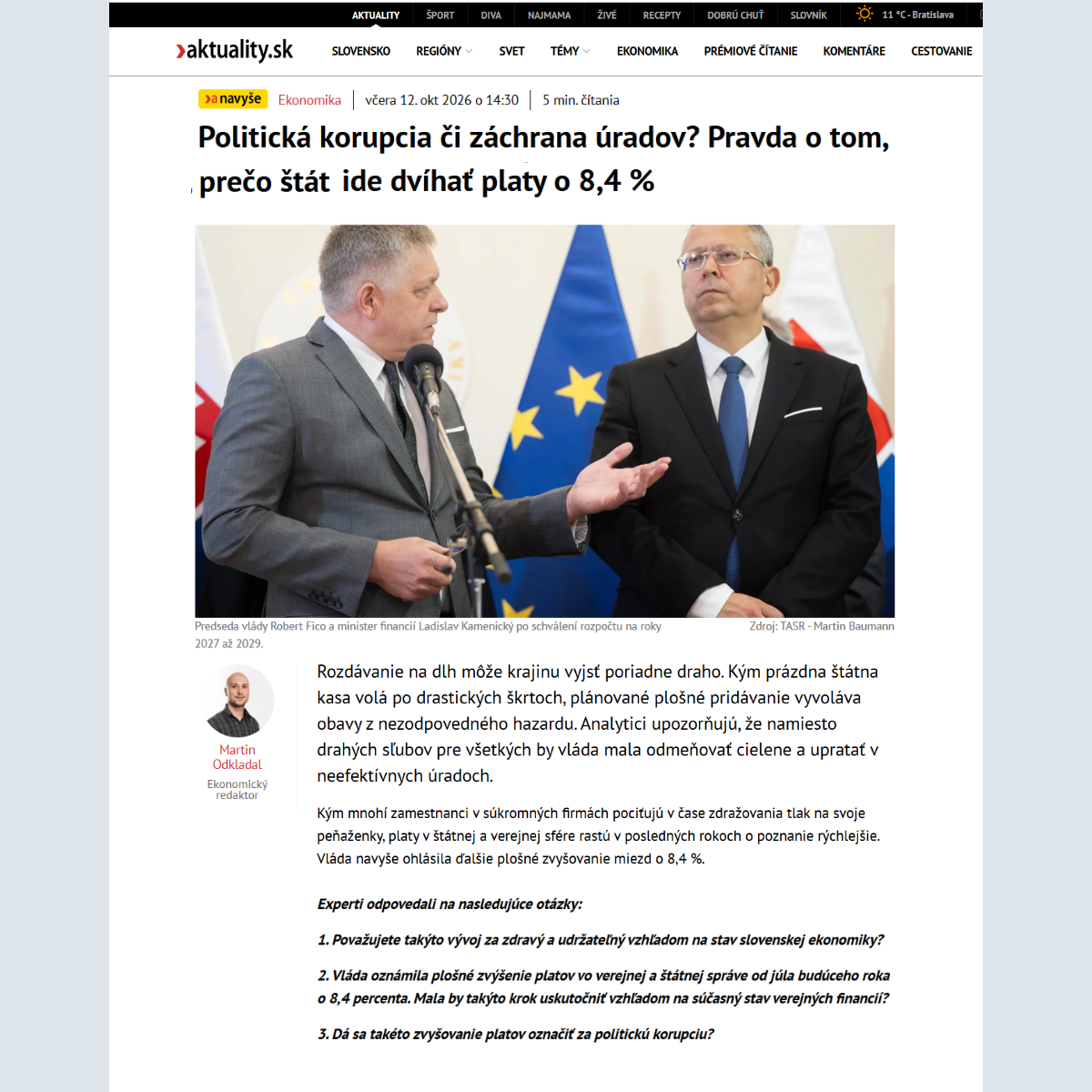
Martin Kahanec in Aktuality.sk on raising public sector wages amid a growing deficit
Aktuality.sk asked a panel of experts, including CELSI Scientific Director Martin Kahanec to assess whether the state can afford an across-the-board 8.4 percent pay rise for public and state sector workers.
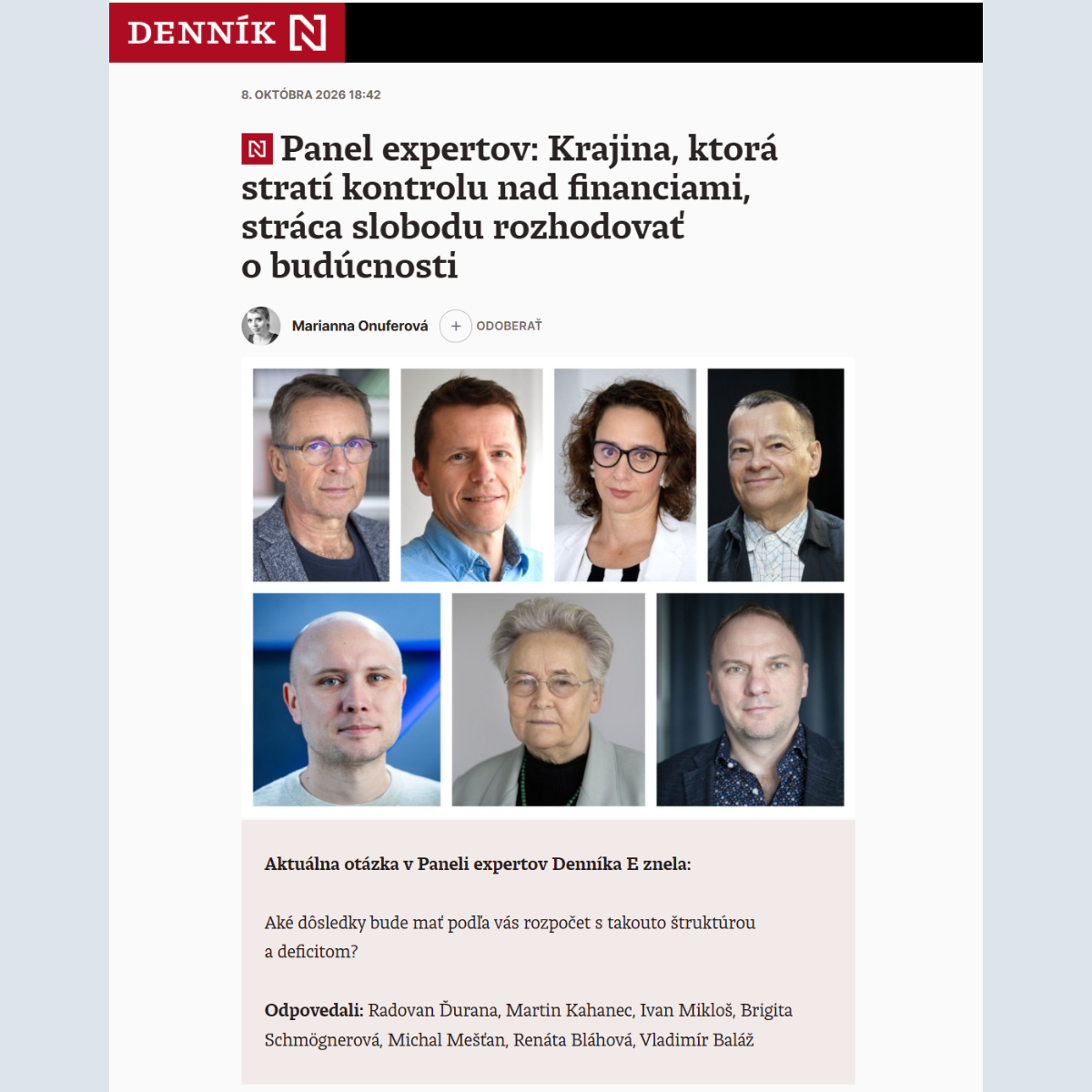
Martin Kahanec in Denník N's Expert Panel on the 2027 state budget proposal: A gamble with Slovakia's future
CELSI Scientific Director and professor of economics Martin Kahanec assessed the consequences of the 2027 public budget proposal for Denník N.
Martin Kahanec in Aktuality.sk on wealth inequality in Slovakia
CELSI Scientific Director Martin Kahanec was asked by Aktuality.sk on distribution of wealth in Slovakia and whether Slovak millionaires have become poorer.
Adam Šumichrast publishes another part of his series on the history of Slovak trade unions in Kapitál
In a series published regularly by the cultural and social portal Kapitál, Adam focuses on the history of Slovak trade unions.
New Discussion Papers
Evaluators’ masculine gender identity may drive gender biases in peer evaluation of business plans
Migrant labour regimes and the Regulation of Temporary Labour Migration in Europe: an Introduction
Expansion of Flexibility and Its Limits. The Rise and Retreat of Serbian Temporary Workers in Slovak Automotives
Sourcing in or sourcing out? Diverging migrant labour regimes and use of temporary labour in the Dutch and Austrian food industries
New Research Reports
SEAD: Enhancing socio-ecological dialogue in the automotive industry
How new policy issues create opportunities for social partner participation: A сomparative study of artificial intelligence and algorithmic management in Slovakia and Italy
Contact us
Phone/Fax: +421 2 207 35 767 E-mail:info@celsi.sk
Are you looking for a specific person of our Institute with whom you want to contact?
See all contacts.
Partneri